Why We Built VIVI in Dubai
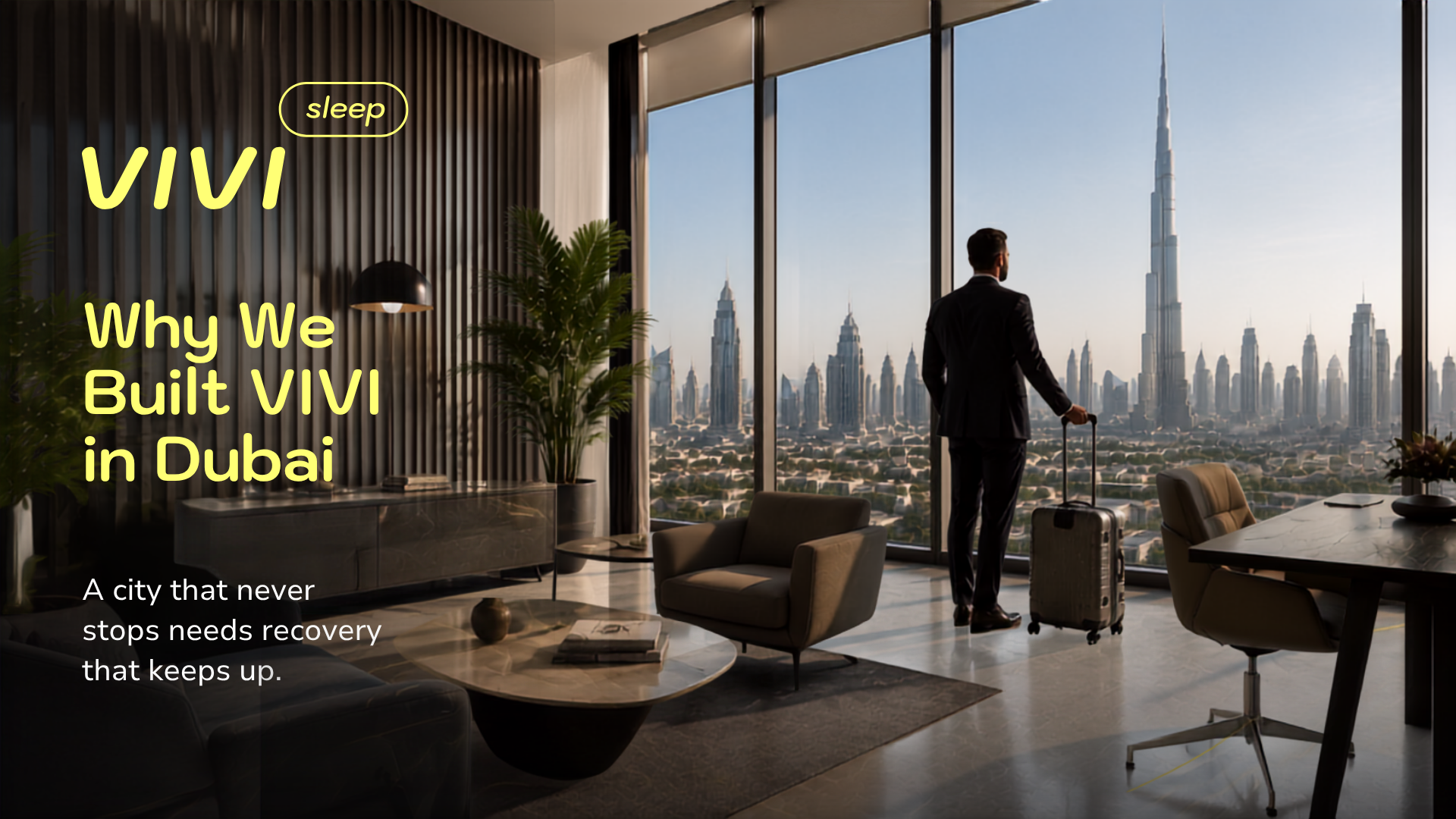
Dubai doesn't really have an off switch, and most of the people who move here know that going in. It's part of the appeal: a city that rewards ambition, moves fast, and gives people from more than 200 nationalities a genuine shot at building something. But the same conditions that make Dubai one of the most attractive places in the world to work also make it one of the more demanding ones to work in. The data on how that demand shows up in people's daily lives is worth looking at directly, because it's the reason recovery stopped being a nice to have and started looking more like infrastructure.
The numbers behind the hustle
Start with hours. UAE employees work an average of seven extra unpaid hours a week, according to a 2025 survey of 2,000 UAE professionals. In the same study, 76 percent said their work-life balance had gotten worse since the pandemic, 59 percent said they find it hard to switch off, and 90 percent said they regularly respond to work emails or calls outside official hours. Only 26 percent felt they had a good work-life balance to begin with.
That pressure doesn't stay contained to working hours. A Q2 2026 regional workforce survey found that 54 percent of employees across the UAE and the wider Gulf reported being under constant strain at work. That figure is 17 percentage points higher than the global average. Younger employees felt it hardest: 58 percent of those aged 18 to 34 reported constant strain, compared with 47 percent of those over 50.
And it shows up in sleep specifically, not just in how people describe their stress levels. A 2024 survey of nearly 950 UAE residents found more than 40 percent sleep less than six hours a night, and 48 percent named stress as the main reason. An older, frequently re-cited 2015 study put the number even higher, with 65 percent of UAE residents reporting they don't get enough sleep. Tracking that deficit is easier than closing it, something we looked at in wearables, sleep scores and the recovery gap.
Why this isn't just about being tired
None of this is a willpower problem, and it isn't really a Dubai-specific biological phenomenon either. The same prefrontal cortex that runs judgment and focus for someone in London or Singapore runs on the same clock here. What's different is the load stacked on top of it. A large share of Dubai's workforce is a long way from the family and social support systems that normally absorb some of that pressure. Visa status is often tied directly to employment, which adds a layer of stakes to job performance that doesn't exist in the same way elsewhere. And because Dubai sits at the crossroads of European, Asian, and African business hours, 'always on' isn't really an exaggeration for a large share of the people working here. It's closer to a job description.
The result is a workforce that is, on average, running on a bigger sleep deficit and a shorter fuse than most of the cities it's competing with for talent.
The future of work here is already shifting, slowly
The response to this is starting to show up in how companies operate, even if it hasn't caught up to the scale of the problem yet. Surveys put UAE workforce demand for flexibility at around 90 percent, and Dubai has been ranked the top global destination for 'executive nomads', professionals who deliberately choose where they base themselves for quality of life alongside work. More employers are treating mental health coverage as a standard line item in benefits packages rather than an add-on, and 'right to disconnect' policies are starting to appear in UAE workplace conversations the way they already have in parts of Europe.
None of that changes the underlying math on hours worked or sleep lost. But it's a signal that recovery, broadly, is moving from a personal responsibility to something organizations are expected to actively design for.
Why we built VIVI sleep pods in Dubai
We didn't build VIVI because we think Dubai works too hard. That's not the argument, and it was never going to be. Dubai's pace is exactly what makes it one of the fastest-growing economies in the world, and nobody who moves here is looking for a system that asks them to slow down. VIVI isn't a wellness benefit, and it isn't positioned as one. It's infrastructure, the same category as reliable internet or a functioning transit system: something that has to exist for a high-output city to keep running at the pace it's already running at, not something designed to change that pace. We make that case in more detail in why recovery is performance infrastructure.
The data above isn't an argument for working less. It's an argument that a workforce running this hard, for this long, needs the recovery capacity to match the demand being placed on it, or the growth itself becomes unsustainable. Economic growth, company growth, and individual performance all depend on the same finite resource: the energy a person actually has available. Dubai has built extraordinary infrastructure for almost everything else that growth requires. Recovery was the piece still missing.
That's the case for building it here specifically. Not to fix Dubai's work culture, but to give it the infrastructure it needs to keep sustaining what it's already trying to do. If you want the practical side, see what's actually inside a VIVI pod, how it works in workplace deployments across Dubai, at conferences and exhibitions, or in malls, libraries and shared spaces.
Frequently asked questions
Related reading
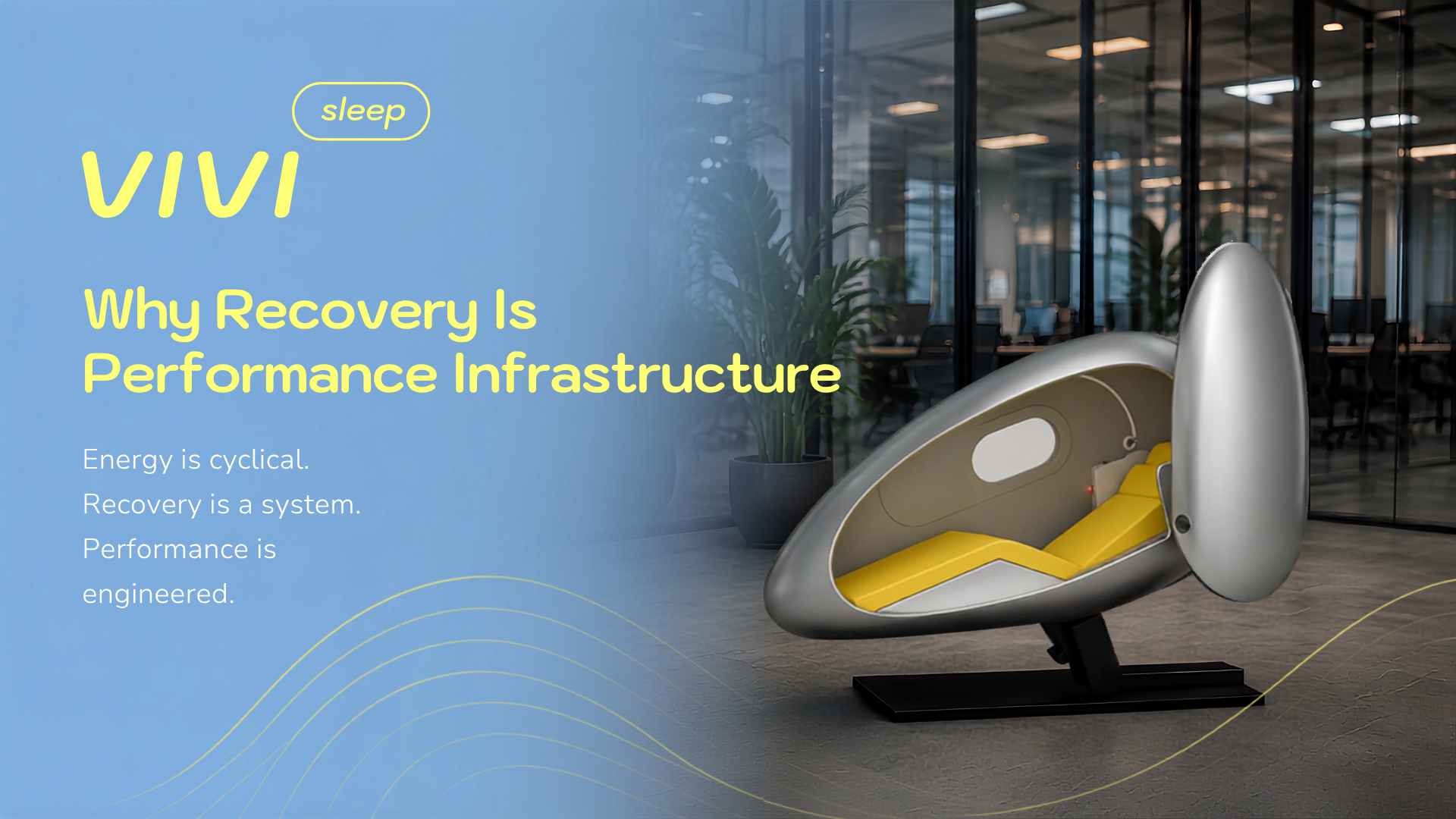
Why Recovery Is Performance Infrastructure
Why the 1–3pm energy dip isn't personal failure but biology, and how a structured 20-minute reset restores focus, judgment, and stamina at work.
Read article →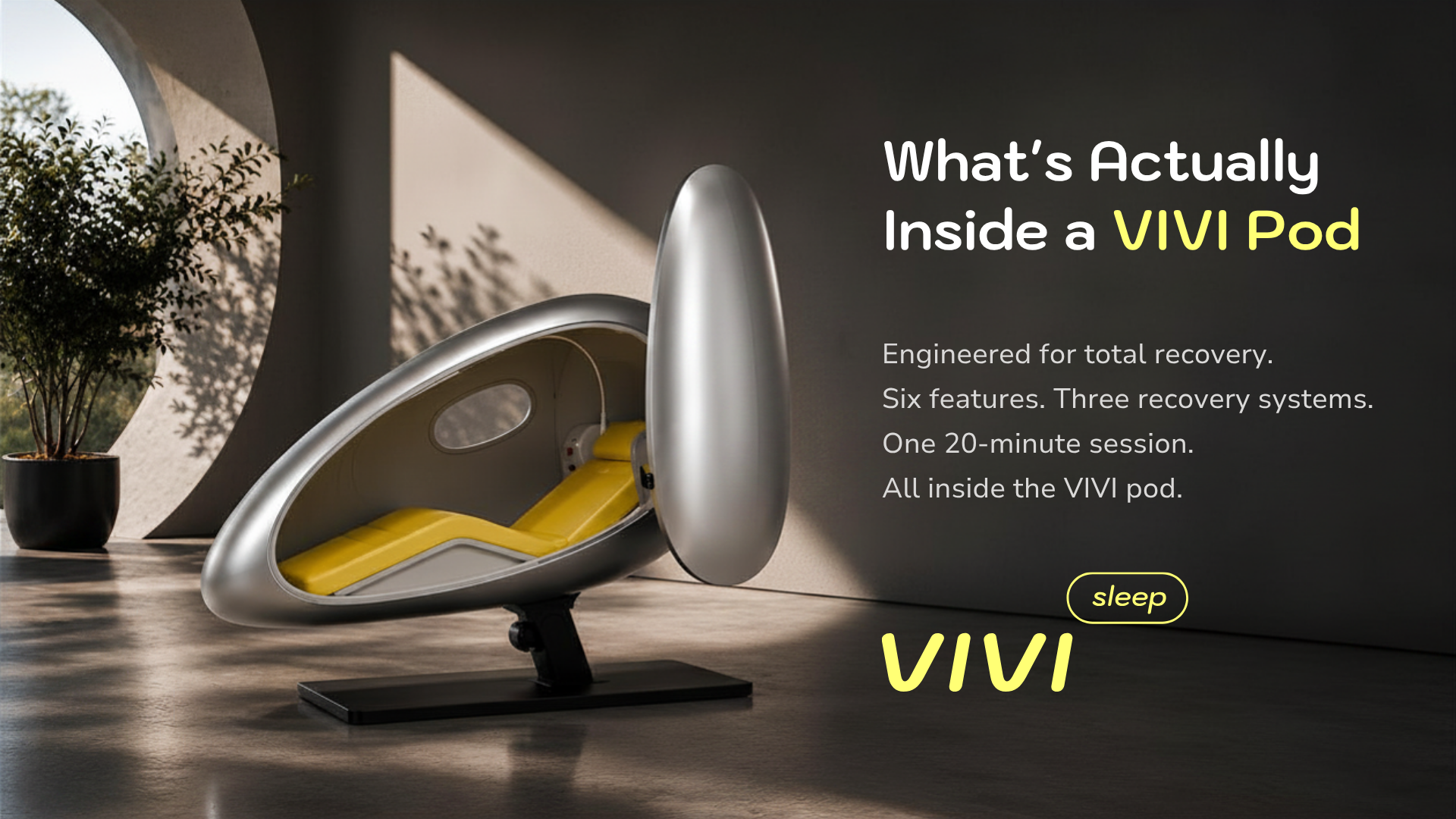
What's Actually Inside a VIVI Pod
The engineering behind every VIVI session: six features designed to deliver physical, mental, and cognitive recovery in a single twenty-minute window.
Read article →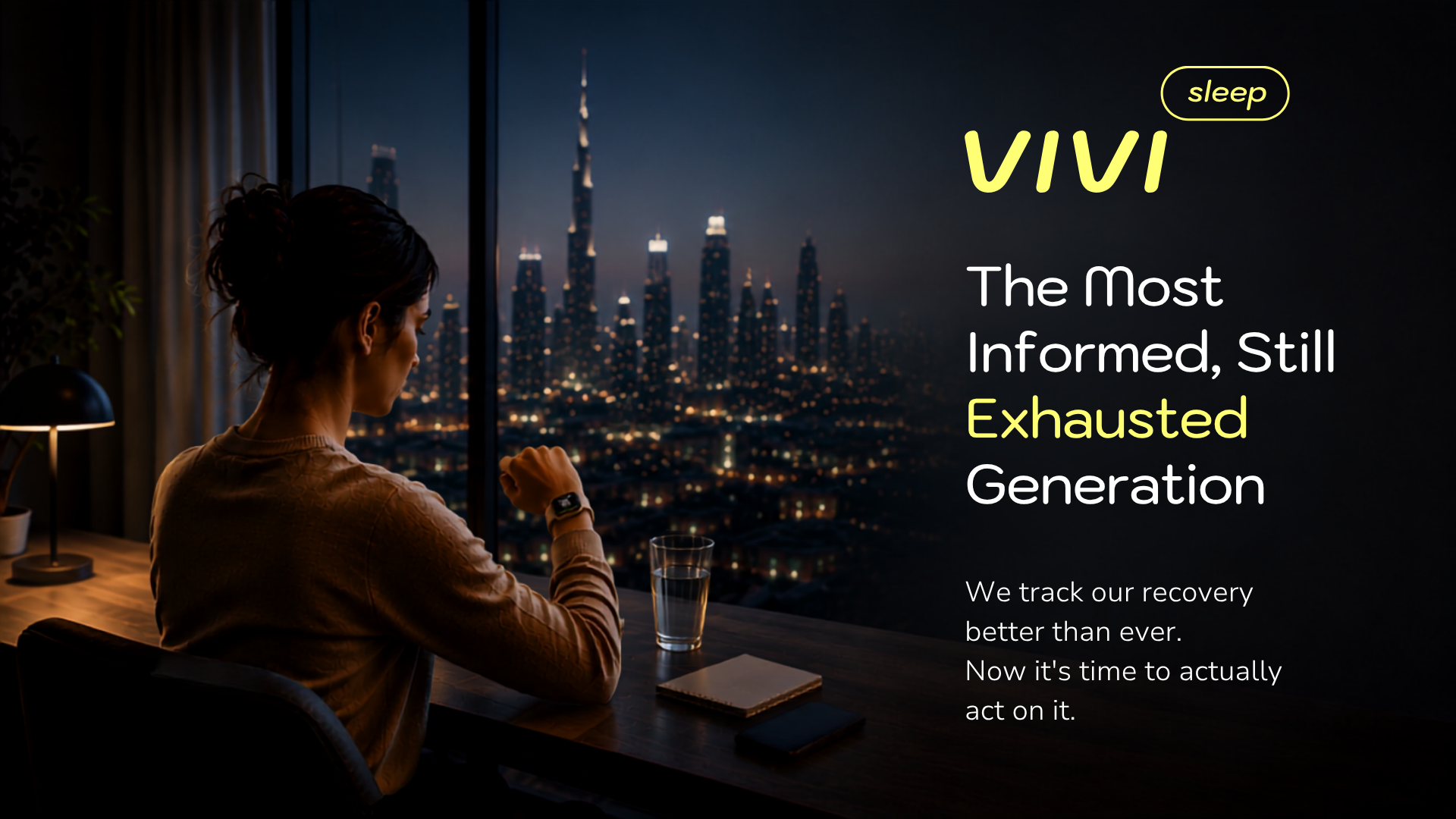
The Most Informed, Still Exhausted Generation
Wearables finally put a number on how tired you are. Here's the part they were never going to solve.
Read article →See which VIVI solution fits your team
Workplace, event, or public space. Explore the right recovery infrastructure for where you are.
Explore VIVI solutions