The Most Informed, Still Exhausted Generation
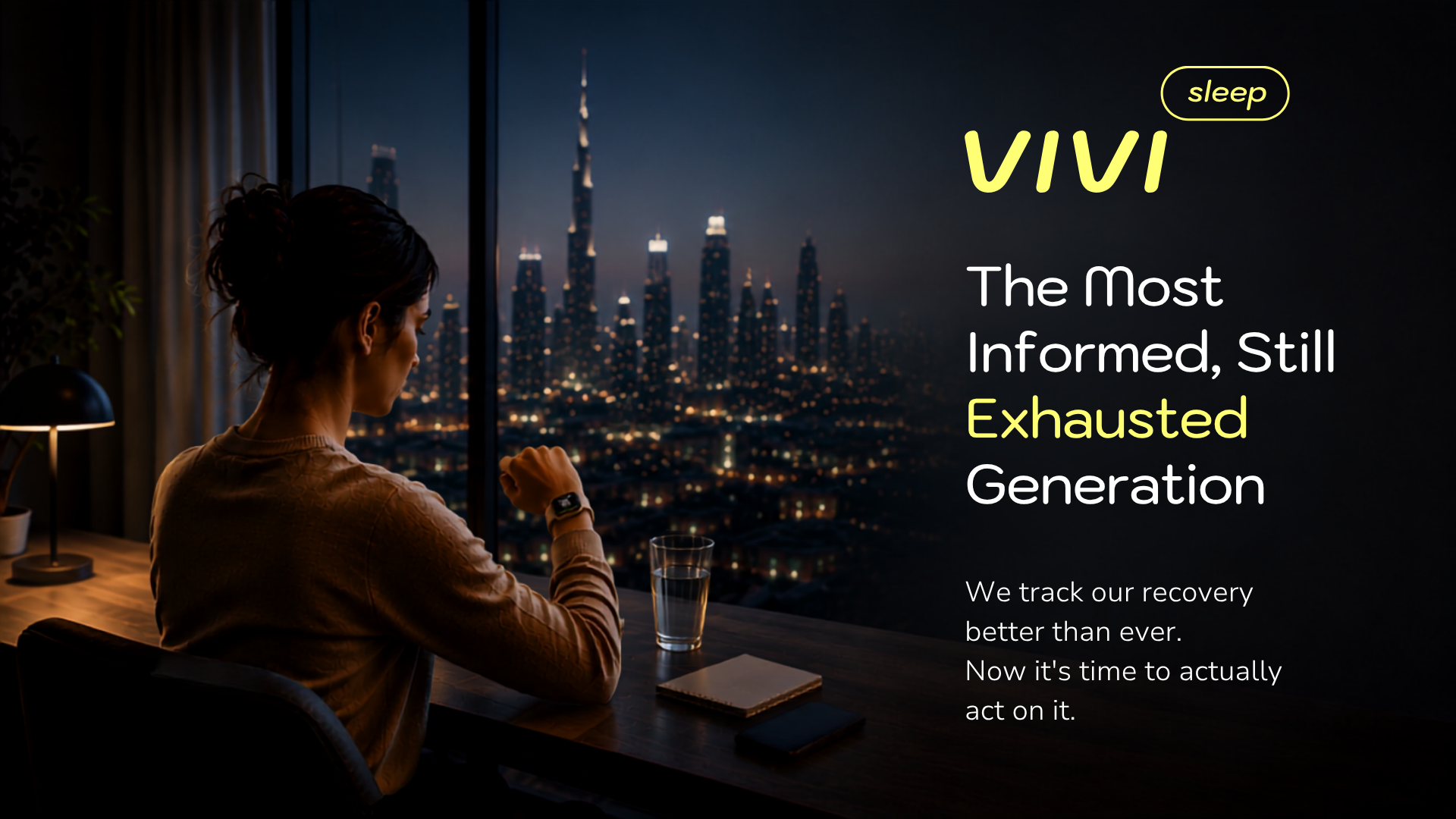
It starts before you're even fully awake. A glance at the wrist, or the finger, or the phone on the nightstand. A number. Recovery: 61%. Sleep debt: 3h40m. Readiness: fair. For a growing number of people, this is the actual first thought of the day, arriving before coffee, before the commute, before anyone's said a word to them.
That number didn't exist for most of human history. Now it exists for millions of Whoop, Oura, and Ultrahuman users, and it's changed something real: people are more aware of their own exhaustion, in more granular detail, than any generation before them.
Sleep debt and the bank account you didn't ask to open
The idea underneath all of this isn't new, even if the tracking is. Sleep researchers have described sleep debt for decades: the difference between the sleep your body needed and the sleep it actually got, and the way that gap doesn't just disappear, it accumulates. Wearables didn't invent the concept. What they did was make it visible, daily, personal, and specific, in a way that turned an abstract idea into something people started describing almost like a bank account. Whoop's own published data puts the average member's nightly shortfall at 43 minutes, a small enough number on any single night that it's easy to shrug off, and exactly the kind of gap that quietly becomes a real deficit once it's repeated most nights of most weeks. You can be in the black or in the red. You can make a deposit or run a deficit. Debt compounds whether or not you're paying attention to it, and a single good night doesn't automatically clear a week of short ones.
Closer to home: how Dubai actually sleeps
This isn't an abstract, global story for Dubai specifically, either. Ultrahuman, which publishes its own research from its Ring AIR user base, found that people in the Gulf region wake more often during the night than users in Europe, India, or the New York metro area, and sleep roughly nine minutes less on average than the other regions in the comparison. Separately, Oura's own regional data on UAE users points to something a little more nuanced than "everyone here is exhausted": UAE residents average 6.85 hours a night, short of the recommended range, but rank fourth globally for deep sleep quality, with sleep efficiency above the global average. Short on quantity, unexpectedly strong on quality, a paradox rather than a simple deficit. It's a more honest picture than either "Dubai never sleeps" or "Dubai is fine," and it tracks with what the rest of this article is arguing: the number is worth knowing, but it's not the whole story.
The gap the number doesn't close
Here's the part that doesn't get solved by better tracking, no matter how accurate the sensor gets. Knowing the balance isn't the same as being able to make a deposit. A reading of "sleep debt: 3h40m" at 8am is just as true at 8am as it is at 8pm, and for most people, nothing changes in between. The number sits there, accurate and unhelpful, because awareness alone was never going to be an intervention.
This is the actual gap. Not that people don't know they're running a deficit anymore, most people with a wearable know exactly how deep it runs, down to the minute. It's that knowing has nowhere to go during the twelve or fourteen hours between waking up already behind and getting a chance to actually rest again. The information arrived. The infrastructure to act on it during the day never did.
And the stakes here are not small, even if they rarely show up on a balance sheet the way an actual bank account would. RAND Europe's research into the economic cost of insufficient sleep found that someone regularly sleeping under six hours a night loses, on average, the equivalent of six working days a year to reduced output, split between missed days and simply being at work while running on empty. That's not a number chasing sympathy. It's the same logic as any other deficit: it costs something, whether or not anyone's tracking it.
Why this isn't a wellness ask
Solving insufficient sleep isn't a corporate charity initiative, and it isn't a soft HR perk to make people feel looked after. It's closer to a mathematical win-win: improving how rested a person is directly protects the output a company is paying for. Nobody has to choose between caring about their people and protecting their margins here. They're the same line item.
This is where VIVI fits, and it's a narrower, more honest claim than "we fix your sleep debt." A twenty-minute session isn't a full night of sleep, and it doesn't clear the account the way the metaphor might suggest. What it offers is the thing the wearable never could: an actual chance, in the middle of the day, to make a deposit instead of just watching the number sit there. If you want the hardware detail, here is what is actually inside a VIVI sleep pod, and why a 20 minute power nap works. Not another dashboard. Not one more thing to check. A place to act on what the reading already told you, while there's still a day left to feel the difference.
The point isn't to be ruled by the number
None of this is an argument for optimizing every hour around a recovery score, or treating a bad reading as a verdict on the day ahead. The people who get the most out of tracking their sleep tend to be the ones using it lightly: a nudge toward an earlier night here, a bit more patience with themselves on a low-recovery morning there. The number is useful exactly to the extent that it stays a tool and doesn't become an authority. What's been missing isn't more precision about how tired people are. It's somewhere to actually do something about it, in the middle of the day it's actually affecting. That somewhere is a pod inside your workplace, on the floor at your next event, or in a public space near you.
Frequently asked questions
Related reading
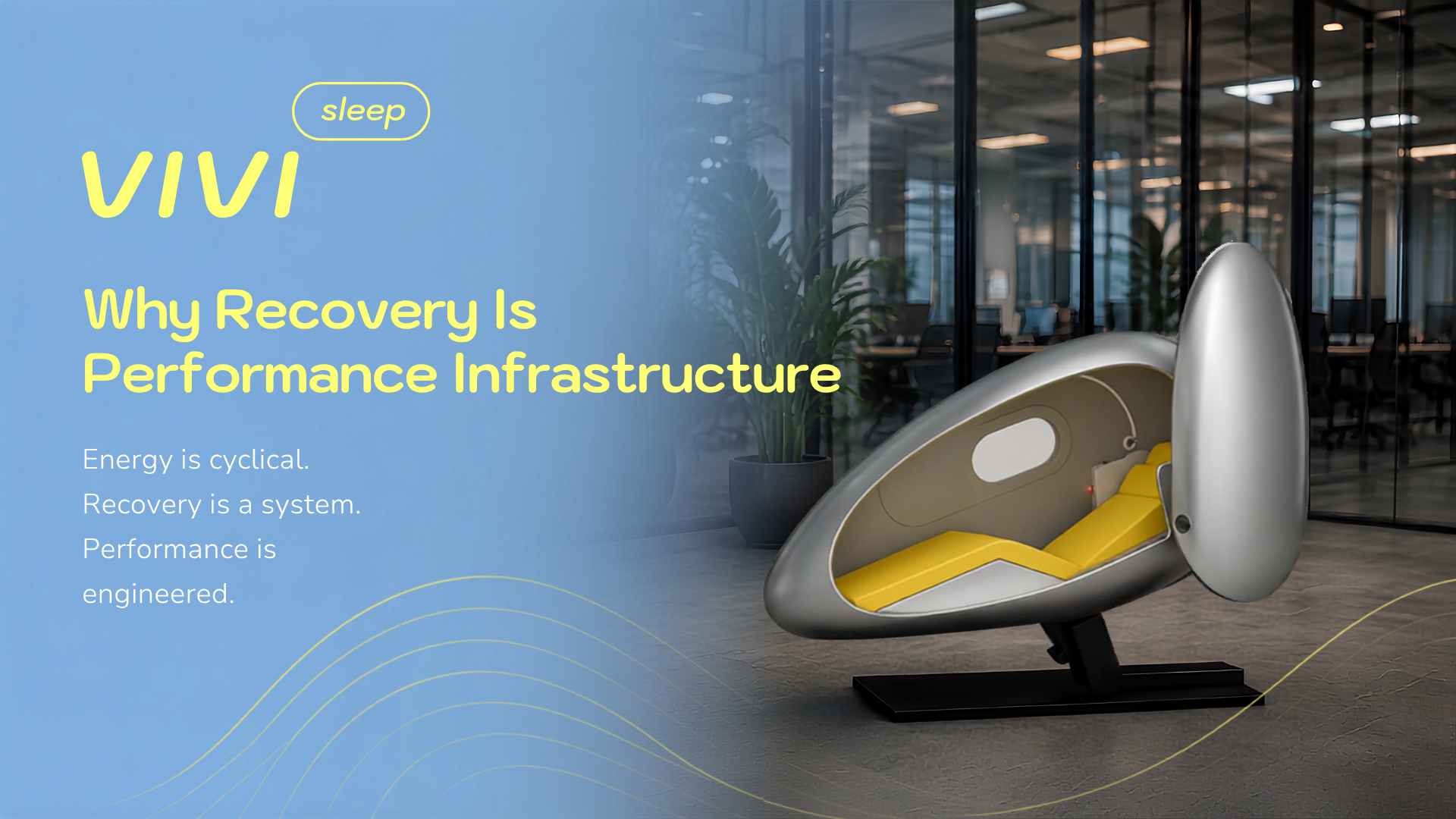
Why Recovery Is Performance Infrastructure
Why the 1–3pm energy dip isn't personal failure but biology, and how a structured 20-minute reset restores focus, judgment, and stamina at work.
Read article →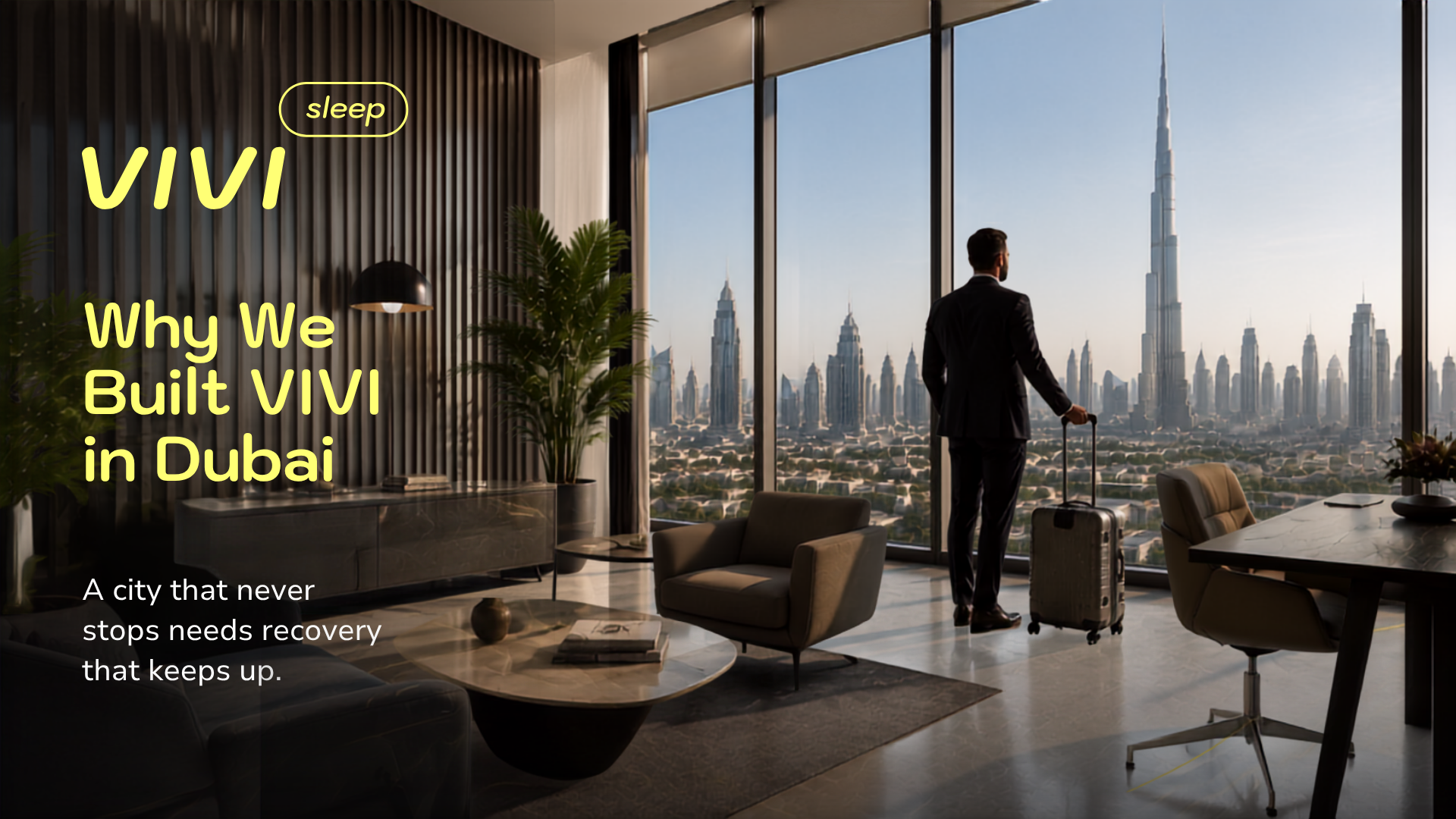
Why We Built VIVI in Dubai
The data behind Dubai's work culture, and why recovery had to become infrastructure.
Read article →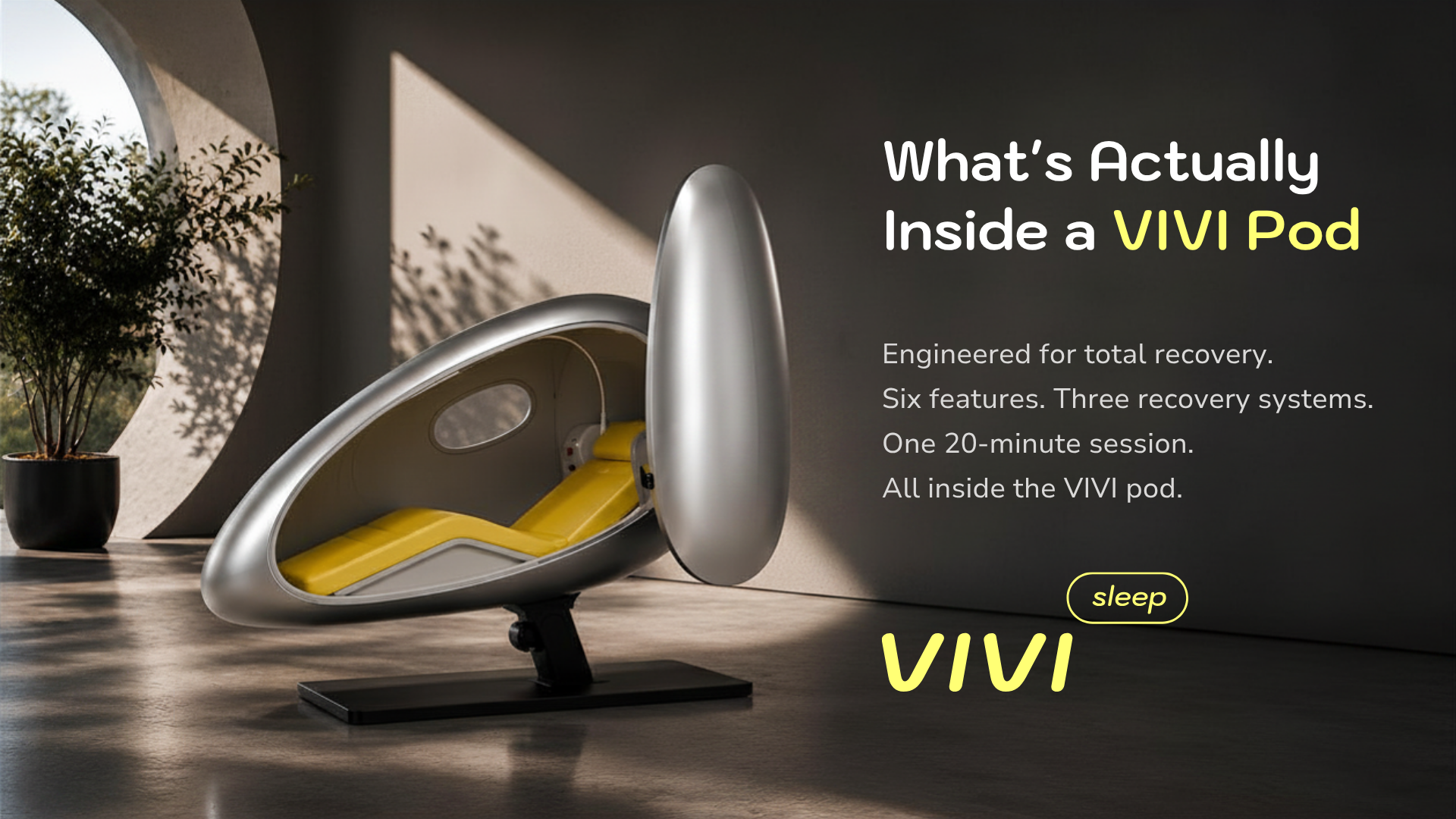
What's Actually Inside a VIVI Pod
The engineering behind every VIVI session: six features designed to deliver physical, mental, and cognitive recovery in a single twenty-minute window.
Read article →Turn awareness into action
See how VIVI fits into your day, wherever you already are.
Explore VIVI solutions